.ai%20(608%20x%2055%20px)%20(1).png)


Most advertisers don’t have an “ad performance” problem. They have an attribution gap.
They can see:
…but they can’t reliably connect upper-funnel exposure (Streaming TV, online video, audio, display) to downstream actions (product views, add-to-carts, purchases, repeat buying, and even cross-campaign lift) in a way that’s consistent enough to scale.
That’s exactly where Amazon Marketing Cloud (AMC) shines—and where Dorado becomes the accelerator.
AMC is a privacy-safe clean room designed for historical, event-level analysis across Amazon Ads signals (impressions, clicks, purchases) with the ability to run custom SQL queries, incorporate first-party inputs, and even create deployable audiences from insights you uncover.
In practical terms, AMC lets you stop treating each campaign like a silo and start answering the questions that actually drive growth:
Amazon has also pushed AMC toward more flexible attribution through custom attribution analysis—including attribution models (first-touch, last-touch, equal-weight, position-based) and a lookback window up to 28 days.
That’s the foundation for true full-funnel measurement.
AMC gives you the ingredients, but most teams still struggle with:
This is where Dorado steps in not as a replacement for AMC, but as the operating layer that makes AMC measurement usable at speed.
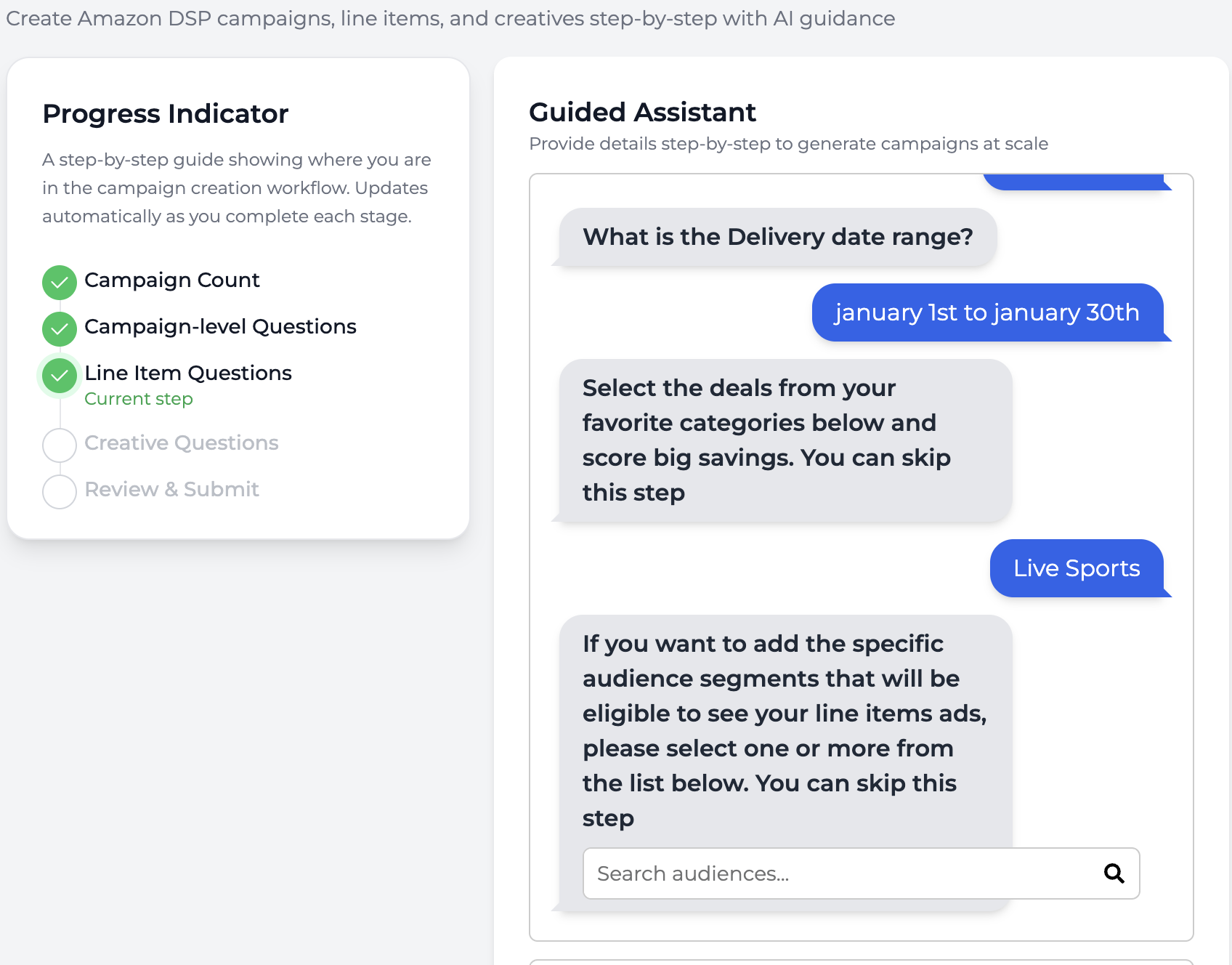
Attribution breaks when campaigns are launched with inconsistent naming, targeting logic, or creative grouping. Dorado is built around pre-built campaign templates, best-practice automation, and real-time performance visibility, so your activation stays structured as you scale.
That matters because AMC analysis is only as good as the consistency of the inputs you feed it.
Traditional Amazon DSP operations can involve delays, approvals, and manual trafficking. Dorado’s thesis is speed—helping teams go live in hours, not days.
Why that matters for full-funnel attribution:
Dorado is positioned as an open architecture platform “built to integrate,” including connections to attribution tools and CRM systems, enabling advertisers to connect more of the funnel and optimize faster.
AMC explicitly supports combining Amazon Ads signals with first-party insights for cross-channel journey analysis.
So the practical play is:
Default reporting tends to overweight lower-funnel tactics. AMC custom attribution was built to fix that—so you can compare cross-campaign contributions and apply models that better reflect consideration cycles and upper-funnel influence.
Dorado’s role is to operationalize this: when your campaigns are templatized, your execution is repeatable, and your performance visibility is faster, you can actually run attribution experiments (first-touch vs. position-based vs. equal-weight) and then make budget decisions without weeks of analysis lag.
Here’s what teams typically build with Dorado + AMC:
And the compounding benefit is this: the more structured your activation, the more trustworthy your AMC measurement becomes—and the more confidently you can fund the top and middle of the funnel without “hoping” it works.
AMC is where full-funnel attribution becomes possible—because it’s built for event-level, privacy-safe analysis across Amazon Ads signals with customizable attribution logic and first-party interoperability. (
Dorado is what makes it practical—by speeding activation, enforcing structure through templates and automation, and enabling integrations so insights don’t die in a report.


.png)

Comments